
PODCASTER/SPEAKER
SMK brings the power of voice, creativity, and emotional connection to stages, podcasts, and publications around the world.
As a keynote speaker and author, SMK blends her experience as a songwriter, storyteller, and educator to explore how creativity, resilience, and self-expression shape human connection. Her work spans her acclaimed Power of Singing Podcast, the forward-thinking 21CS Book, and the inspiring Her Music Lives series—each designed to help people unlock their authentic voice and live with greater clarity and purpose.
Podcast
Power of Singing Podcast
The POWER OF SINGING podcast is lovingly offered to you by the five VOICES of the Santosha Voice Group. Susan Mohini Kane, founding director, is a former opera singer and college professor turned Indie artist and teacher, both online and in the Los Angeles area. Rich McKinney, a composer, pianist, and choral conductor from Missouri who used to be a beautiful singer before he lost his vocal cords to agent orange exposure in Vietnam. Rich has a YouTube channel and has posted over 1000 piano pieces and is currently teaching composition and composing for local choirs. Heather Fetrow, is a professional classical soprano and teacher from the Washington DC area who specializes in music by women composers and who is an active freelance soprano in the classical world. Joyce Wells is a beautiful singer-songwriter and vocal coach from upstate New York. After teaching elementary school for many years as well, she has turned her focus now to her program that she calls “Enjoy Your Sound”; through this she guides people to discover and connect with their unique voice for speaking or singing. Joseph Gárate, an excellent tenor and teacher who does many classical gigs all over southern California and who is the lead singer and writer for the band: Diamonds. Joseph writes deeply personal songs. Joseph is passionate about music for folks with special needs and is also a DJ!
The five of us believe in the Power of Singing to uplift the spirit, bring people together, unlock love in each. In each episode of this podcast each of us will tell a story, share a song, and then lead a discussion on a question of our own devising on the topic at hand.
Season three
The Power of Children Singing
Episode #1: Discovering the Ability to Make Sound
August 25, 2023
Rich McKinney speaks eloquently about the powerful experiences he has had rediscovering his own ability to make sound after losing his vocal cords and relates that to the powerful ability children find in their own voices.
Episode #2: Why Children Sing
October 31, 2023
Featuring Dr. Susan Mohini Kane, who is an expert in vocal development. Dr. Kane shares audio clips of one particular child singing at the ages of 3, 4, 5, 6, and 7. It is so interesting to hear the group discuss this case study of why children sing at different ages.
Episode #3: The Journey of a Child Singing: Exploration & Vulnerability
December 18, 2023
This episode features Joseph Gárate speaking about the importance of feeling supported and safe as children, especially when they are expressing themselves through singing. Joseph shares an original song written with his eight-year-old student. The group discusses their own childhood memories about being supported in their creativity.
Episode #4: Why Children Love Singing Together
December 25, 2023
Welcome to Season #3 Episode #4: Why. Children Love Singing Together – featuring Joyce Wells of Enjoy Your Sound. A perfect episode to be released on Christmas Day. Joyce shares her memories of singing together with her siblings as a child and a recording of her conducting a very large group of children singing together. The group discusses their memories of singing with others as children.
Episode #5: Voices of Children: A Palette of Invention and Character
January 1, 2024
This final episode for Season Three starts the new year of 2024! We are already in production for Season 4: THE POWER OF SINGING WITH A PURPOSE. In this episode featuring Heather Fetrow of The Penelope Project, we explore creativity and expression of children when they sing. And the group explores how their voices own were described by other people when they were children resulting in a surprising discussion about identity.
Season Two
The Power of Singing in Harmony
Five Episodes + 1 Bonus Episode for Mother’s Day
Episode #1: Directing a Community of Singers
January 11, 2023
Rich McKinney speaks eloquently about the powerful experiences he has had as a choral conductor. His story is truly moving. Then he shares a recording of one of his choir’s performance of his own piece: Wait on the Lord. This piece will melt your heart. After that Rich asks the group about when we knew we were singers.
Episode #2: Find Harmony Everywhere
February 7, 2023
Featuring Joyce Wells of EnjoyYourSound.com who shares her stories of singing in harmony with her siblings growing up. The Voices of Santosha Voice Group discuss where we find harmony in nature. Joyce’s rendition of “Row Your Boat” is nothing short of perfect simplicity in harmony.
Episode #3: Harmony is a Worthy Goal
March 7, 2023
This episode features Susan Mohini Kane and her song “Waking Up in Wonderland” from her upcoming album of the same title. The Voices of the Santosha Voice Group discuss how harmony can help build great teams and bring groups together. They even suggest ways they would do it in a consulting situation. So creative and helpful!
To hear more of Susan Mohini Kane’s music you can go to her BANDZOOGLE site!
Episode #4: Fill the Gap with Harmony
April 4, 2023
Welcome to Season #2 Episode #4: Fill the Gap with Harmony – featuring soprano Heather Fetrow from The Penelope Project. When family members sing in harmony, it brings a deep connection found no other way. Heather shares her story and a beautiful recording of herself singing with her sister. The Voices of the Santosha Voice Group discuss how harmony fills the gap between disparate opinions and people — so relevant in this day and age.
Episode #5: The Power of Connection Amid Conflict
May 9, 2023
This final episode for Season Two: The Power of Singing in Harmony is The Power of Connection Amid Conflict. This episode features Joseph Gárate, professional tenor and teacher, singer/songwriter, DJ and advocate for people with special needs, in the Los Angeles area. Joseph’s featured song is “We will always be alone”. Every episode also includes the VOICES of the Santosha Voice Group: Rich McKinney, Joyce Wells, Heather Fetrow, and Susan Mohini Kane: all singers and teachers and all dedicated to bringing music into the world as often as possible!
We will have a bonus episode for this season too! Watch for our Mother’s Day episode coming soon!
Bonus: Mother's Day Episode
The Power of Motherhood & Singing
May 14, 2023
In this bonus episode for the end of season two, we get to meet and hear Miranda Burnett, a beautiful singer and mother of three. Like so many great singers out there, Miranda stopped singing for a few years while she was raising her kiddos. Now that the oldest is graduating from high school, Miranda feels ready to get back to singing with a new, more mature and healthy perspective that gives such a beautiful feeling to her singing. The VOICES of the Santosha Voice Group: Susan, Rich, Joyce, Heather, and Joseph are on hand to ask her questions about being a mom and a singer – just in time for Mother’s Day! Miranda performs a few songs including “Nancy Hanks” by Katherine K. Davis (with lyrics by Rosemary Benét) published in 1941, accompanied on piano by Jennifer McGuire. Enjoy!
Season One
The Life-Transforming Power of Singing
Five Episodes + 1 bonus holiday episode
Episode #1: The Power of Singing to Create Community
July 5, 2022
Heather Fetrow, professional soprano and teacher shares her life-transforming story about singing and shares her beautiful song “Fairy Lullabye” by Amy Beach. The Group discusses how each of us benefits from singing.
Episode #2: The Power of Singing to Affect Others
August 9, 2022
Joseph Garate, professional tenor, singer-songwriter, and teacher shares his life-transforming story of singing and his original beautiful song “I Found a Baby in the Woods”. The Group discusses what emotional state we must be in to be creative.
Episode #3: The Power of Singing to Illuminate One's Inner World
September 6, 2022
Joyce Wells, professional singer-songwriter and vocal coach, shares her life-transforming story of singing and her original song “Beautiful Friend”. The Group discusses how we connect to singing on a deep personal level.
Episode #4: The Power of Singing to Heal
October 4, 2022
Rich McKinney, professional composer, choral conductor, and pianist, shares his life-transforming story of singing before losing his vocal cords to agent orange exposure in Viet Nam. He shares a recording of himself singing and playing the piano on a moving inspirational song. The Group discusses how music heals.
Episode #5: The Power of Singing to Affirm One's Existence
November 8, 2022
Susan Mohini Kane, professional soprano, singer-songwriter, and teacher shares her life-affirming story of singing and her recording of performing the Dvorak Te Deum with orchestra and chorus. The Group discusses how singing helps them know who they are.
Bonus: Season's Greetings with Love from the Santosha Voice Group
The five VOICE of the Santosha Voice Group share their favorite holiday memories and songs.
21CS Book
21CS — The Future of Singing Careers
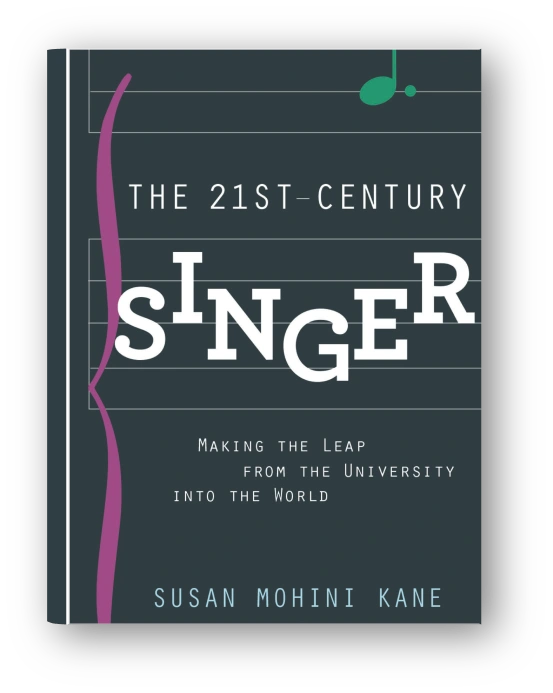
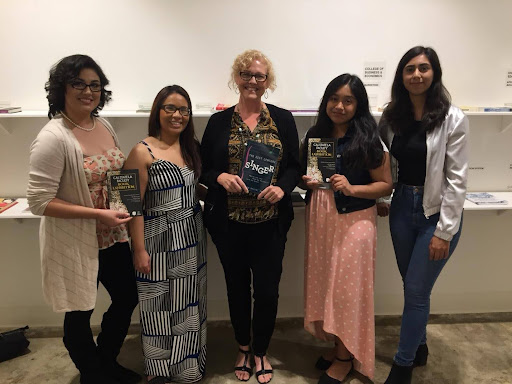
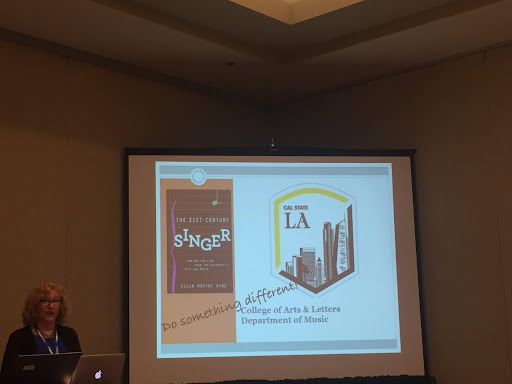
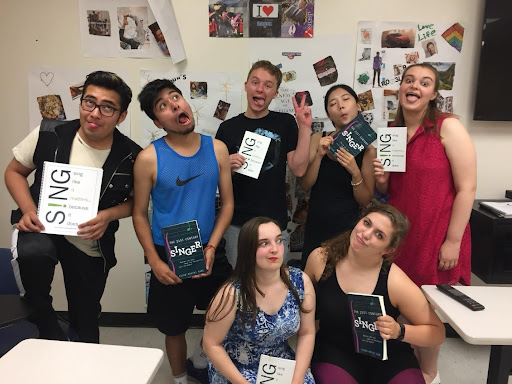
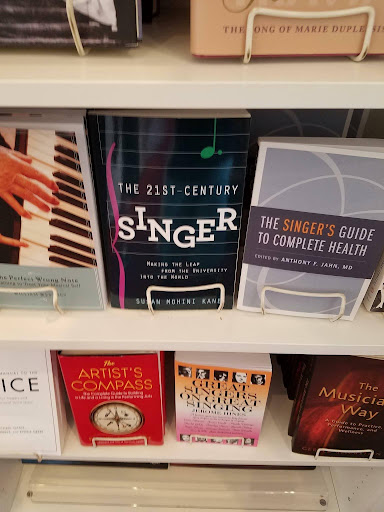
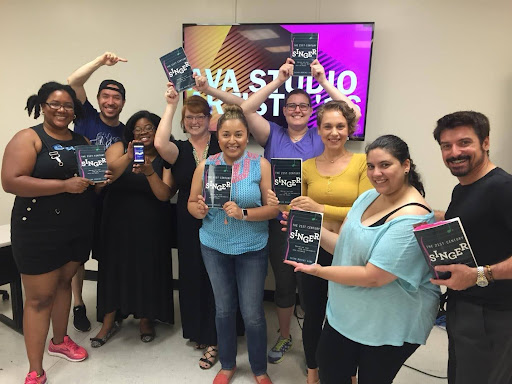
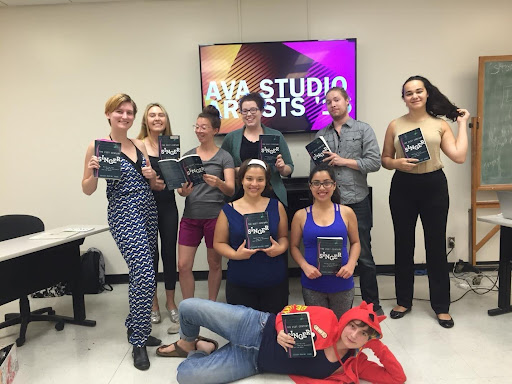
SMK’s groundbreaking book: The 21st-Century Singer – Making the Leap from the University onto the Stage turns 10 years old this year! Published in 2015 by Oxford University Press, this book has been used in many college courses, summer music programs, and private study groups on how to form music careers and thrive after graduation. You can still find the book in the Metropolitan Opera and Julliard Book Stores. Dr. Kane has traveled all over the country doing conference presentations, workshops, and master classes on this topic – what does a singer do after graduation from college with a degree in music?
Book Reviews

Kane’s thoughtful yet disciplined approach as outlined in The 21st Century Singer, encourages the kind of self-reflection and creativity that, at the very least, can lend direction and big-picture perspective to career goals while also rekindling a love of singing.
Brian Manternach (Classical Singer Magazine, October 2015)
In the research for this book, she [Kane] encountered many singers who have found nontraditional ways to make a living from their art. The discovery transformed her from a pessimist to an optimist about the value of a degree in vocal performance. Even more sweeping, however, is her realization that “singers who lead can change the world.” All of this is heartening for singers who are graduating with a degree in vocal performance.
Debra Grashner (NATS Journal of Singing, October/November 2015)
Modern Singer Magazine
7 Mindset and Career Books for Singers
Living in New York City comes with great one-dollar pizza and interesting coffee shops. It also comes with long commutes spent on busy trains and packed buses. To fill the time, I read books and listen to audiobooks in the hope of improving myself and my singing life. Here are seven books that have really helped me this year. The top three are:
1. 21st Century Singer by Susan Mohini Kane
If you need ideas on how to expand your performance possibilities, this is definitely the book for you. In this extensive and thorough volume, Susan Kane discusses every part of growing a substantial singing career – from mindset to repertoire to alternative ways to earn an income while performing. The book is geared towards recent graduates of opera programs. However, as a veteran of the industry, I still found her information extremely helpful. This book even includes interactive sections for self-reflection. Even though I have been out in the real world for a number of years, I found many new ideas to fuel my creative career in this book.
2. Daring Greatly by Brene Brown
Daring Greatly is one of my favorite books of all time. Brene Brown is a professor of social work, with her main research being shame and vulnerability. She is best-known for her two viral TED Talks on the subject. This book talks specifically about having the courage to be vulnerable in a world where such actions are often not encouraged. Singers are in a unique position, in that we are constantly facing vulnerability in our careers. I re-read this book often, and everytime I re-read it I gain a different perspecive.
3. The Art of Asking by Amanda Palmer
Amanda Palmer is a cabaret performer and performance artist. She was one of the first artists to produce a completely grass-roots supported album by raising one-million dollars on Kickstarter. In this incredibly heartfelt, vulnerable book she discusses how she created her fan base, and how she conquered her fears about asking for help. Even though Amanda is not an operatic performer, I find her ideas and courage extremely inspiring. I think she has a lot to teach us as classical musicians.
Gallery
Her Articles
Her Music Lives Series
- Live performances
- Information about woman composer
- Connection questions
- Resources
- By experts in the field
- Accessible
Susan Kane Reflects on Her New Book: The 21st Century Singer
That’s because we first worked with Susan several years ago when she was just starting work on the book! Witnessing the development of this project from concept to the physical copy sitting our desk has been awe inspiring.
There’s nothing more amazing than seeing the transformation of an idea into a tangible concept that will impact people and the world in a meaningful way.
On the heels of a successful launch, we wanted to ask Susan a few questions about her book and her creative process in writing it.
We hope you feel as inspired by her work as we are. And we encourage you to tackle your own big projects and bring your dreams to life.
Interview with Susan Kane
iCadenza: Did you ever reach a point where you felt you lacked opportunities in your musical career? If so, how did you handle that?
Susan: Of course, I’m a soprano! There were so many of us at all my auditions that we could have populated a small village.
My first try at making more opportunities for myself was to start my own opera company. I started Carnegie Opera Theater just outside of Cincinnati where I went to grad school. I got people to invest in it and then put on operas that were only the length and price of a movie—and all in English.
I cast my friends and myself and paid everyone. My big thing was to pay the singers on the same scale I paid the orchestra, so great singers auditioned from all over the country.
All the while, I kept auditioning and performing with local opera companies and orchestras and also had regular church jobs and freelance gigs. It was a busy and fun life! That work lasted for five years until I decided I needed health insurance, which is when I took my first teaching job. Even while teaching I have always auditioned, gigged, and created opportunities for myself and still do today.
iCadenza: Why was this book necessary for you to write? Why is it important that this book exists?
Susan: This book came out of summer workshops I was giving for my master’s students who were graduating. They wanted more voice lessons and guidance about what to do next, so they asked me for the workshops.
During those summers I developed exercises to help the students find their own answers for their unique and specific lives. I was blown away by the answers they found for themselves and what they did with those answers to find meaningful and lucrative places for themselves as singers in the world.
We know that there are about 35,000 singers out there at any given moment looking for singing jobs and only about 1,800 will get those jobs. This book is necessary for the other 33,200 singers who have something unique, beautiful, and musical to offer to the world but cannot seem to find their place.
Studies show that most of those 33,200 will actually QUIT singing five years after graduation. What a tragedy! I want those talented singers to be singing everyday out in the world using all their talents to help people live better lives. This book helps singers find their own unique niches and audiences to craft a beautiful and lucrative life in singing.
iCadenza: Did you meet any resistance (internal or external) when you wrote this book?
Susan: Both! My own colleagues, famous voice teachers, told me that I was crazy and that singers who aren’t working aren’t worth the trouble. I, myself, felt like: who am I to challenge the status quo? Maybe I should just keep my ideas and opinions to myself and be a good girl. Am I just crazy?
Our field is pretty entrenched in its own story. Here’s the story: Yes, it’s hard to get a job in singing but if you don’t get one then you shouldn’t be in singing anyway because either you aren’t good enough or you don’t want it badly enough. That’s the story—and voice teachers, opera producers, music directors, and singers are sticking to it.
I’m here to tell you that it’s a lie. It may have been true in 1850 when there were fewer singers in the field and there were many more jobs for those singers (so that a good 50% of singers were employed).
In the 21st century, however, when only 6% are working, it only makes sense that there are some truly talented, excellent singers who aren’t working—not because they aren’t good enough but because they haven’t gotten enough opportunities or haven’t found their niche. I’d like to keep the top 30% singing, wouldn’t that be a good start?
iCadenza: You did so much research for this book. What facts or statistics surprised you the most?
Susan: Well, the 6% I mentioned above was shocking. Because of the internet, the few big opera stars that exist can be seen all over the place: the world series, the super bowl, commercials, movies, and sitcoms.
Those stars have inspired huge numbers of singers to get performance degrees from universities. Also because of the internet, audiences prefer to watch their opera “on demand” which has meant the closing of many live opera venues. Those two trends collided in a bad way, in that agents and managers can only find work for about 6% of the vast number of good singers. As a field we are looking at a 94% failure rate! That was truly shocking.
I also didn’t realize that less than 15% of all people have college degrees. That means anyone with a degree in anything, including music, is a leader in this country, or could be with the proper inspiration.
And finally I was truly blown away by the “bright spots,” the huge number of creative excellent singers who have found meaningful and lucrative destinations for their singing despite the odds! I don’t have a statistic for these great people because more are emerging every day in every field.
iCadenza: Describe your creative process when writing this book. What techniques worked best for you?
Susan: James Taylor! I always listened to James Taylor while I was writing. This book has those songs vibrating in between the lines on every page. For some reason James Taylor calmed me enough to keep writing when I was scared or tired or doubting myself. First of all, he overcame such huge obstacles to keep singing—and he’s still singing at age 67. Plus his songs always made me want to accept myself as I am.
I also set an alarm so I could manage the time I was spending at the computer. That helped me know that I couldn’t stop until the alarm went off. I also made myself stop when the alarm went off. When the alarm goes off, I take a break no matter what.
I can always go back to another timed session after the break. (I also use that discipline to practice.) Somehow, knowing that I only have a limited amount of time helps me focus on the task at hand. Of course I don’t allow myself to check email or answer the phone during those timed sessions.
iCadenza: You’ve obviously learned a lot from your singing career. How did your musical background help inform how you approached this book?
Susan: I felt that it was important for me to be in today’s performing world myself while I was writing about helping other singers go into that world. Though I remember how I felt auditioning and performing in my 20s, the world has truly changed since the turn of the century.
The 21st century reality for singers is almost completely different than it was from 1980-2000, the years most teachers and directors started out. So I continued to perform at least once a month and attempted to market myself, both as a freelance singer and as part of my duo: Kristof & Kane, from 2008 until the present day. I did that all the way through the writing of this book and continue to do it so that I can truly understand the obstacles singers face today.
For example:
When I am marketing myself online, I have questions:
Is my website the way to go or should I do an email list? Should I pay for ads? How do I find my audience? Will it work to do shows online? If so, should I do a YouTube channel or do something like www.concertwindow.com?
When I am choosing repertoire, how can I choose the best repertoire for me and for my target audience? Since I won’t get paid until after the gig, how do I make ends meet until then? And how can I ensure that I’m going to make money at this gig? What works and what doesn’t work?
How can I make a meaningful difference as a singer in the world? Who needs my singing?
The process of grappling with those questions and more has given me some of the insights I can share in the book.
Continuing my performing career and discovering the 21st century landscape also helps me to communicate with voice teachers who stopped performing when the landscape was totally different.
For example:
We didn’t have the internet when I started singing. All my success in my 20s and 30s happened through the people I knew in person. Today we “know” people online and have the ability to keep in touch with many more people, which leaves us with the questions: Who can we ask for what kind of support? Will you be an audience member, donor, loud-mouth advertiser…?
In my early years, I could only hear about auditions through snail mail newsletters. By the time I got the newsletter I might not have time to send in my materials through snail mail to get that audition. Snail mail limited the places we could audition, so we auditioned for everything we could. Now, we get audition information immediately with plenty of time to get our materials in. The new challenge is trying to take only the auditions that will yield a good result. The decision process is totally different.
Also, years ago there was only one field in which singers could make money: music. Now, singers are hired at hospitals, government agencies, corporations, etc. We couldn’t get that information before the internet. Now we have to seek out partners in the community and pitch our value for their organization. This didn’t exist when I started out.
iCadenza: What have you learned about self-promotion in terms of marketing your book? What’s working? What’s not?
Susan: The book just came out in January so I’m fairly new at marketing it. My publisher is very large and has many books to promote so I am working with them to make my book a priority. I have found they will do a lot for the book if I propose and manage it, but very little if I don’t. So I am developing a good working relationship with my marketing editor and starting to see what they can do in combination with my physical presence at an event.
I now know that they will make posters, send books, work with vendors, publish my blog posts on their blog, provide advertisements online and in print, etc.—that’s a lot! So every conference where I might be presenting or anywhere I’m performing or teaching, I can call on them to provide support. That works.
I cast my friends and myself and paid everyone. My big thing was to pay the singers on the same scale I paid the orchestra, so great singers auditioned from all over the country.
All the while, I kept auditioning and performing with local opera companies and orchestras and also had regular church jobs and freelance gigs. It was a busy and fun life! That work lasted for five years until I decided I needed health insurance, which is when I took my first teaching job. Even while teaching I have always auditioned, gigged, and created opportunities for myself and still do today.